


Infrared spectroscopy can be used to measure samples from as small as a few microns all the way up to a few centimetres in size. We can use the technique to answer questions such as:
- What is this material? (identification)
- Where is it? (i.e. distribution of a component within a matrix)
- How much of it is there? (quantitation)
- Has there been a change?
In answering these questions, we can see that sometimes we will be dealing with bulk materials, sometimes small particles or contaminants. Equally, there will be occasions where we want to understand the composition of the whole material, and other times we’ll be wanting to detect things only in certain areas, either within the bulk or on its surface. Infrared spectroscopy affords the ability to do all these things simply by changing the technique between transmission or reflectance, and by selecting either a macro (benchtop) system or a microscope spectrometer system.
Blended polymers in recycled feed material
Around 14 million tonnes of waste are sent to landfill in the UK alone each year, with another 12 million being recycled [1]. Plastics are particularly amenable to recycling, but the problem is the variety of plastic materials that are intermixed in waste. In order to produce useable recycled feedstock, recyclers must separate out different polymers as best they can.
Polyethylene (PE) and Polypropylene (PP) are two very common polymers that are found in waste. We can quantify blends of the two using IR spectroscopy on thin films of the mixed material. In order to do so, we need to build a calibration from known mixtures of raw material that we can later use to quantify unknown blends.
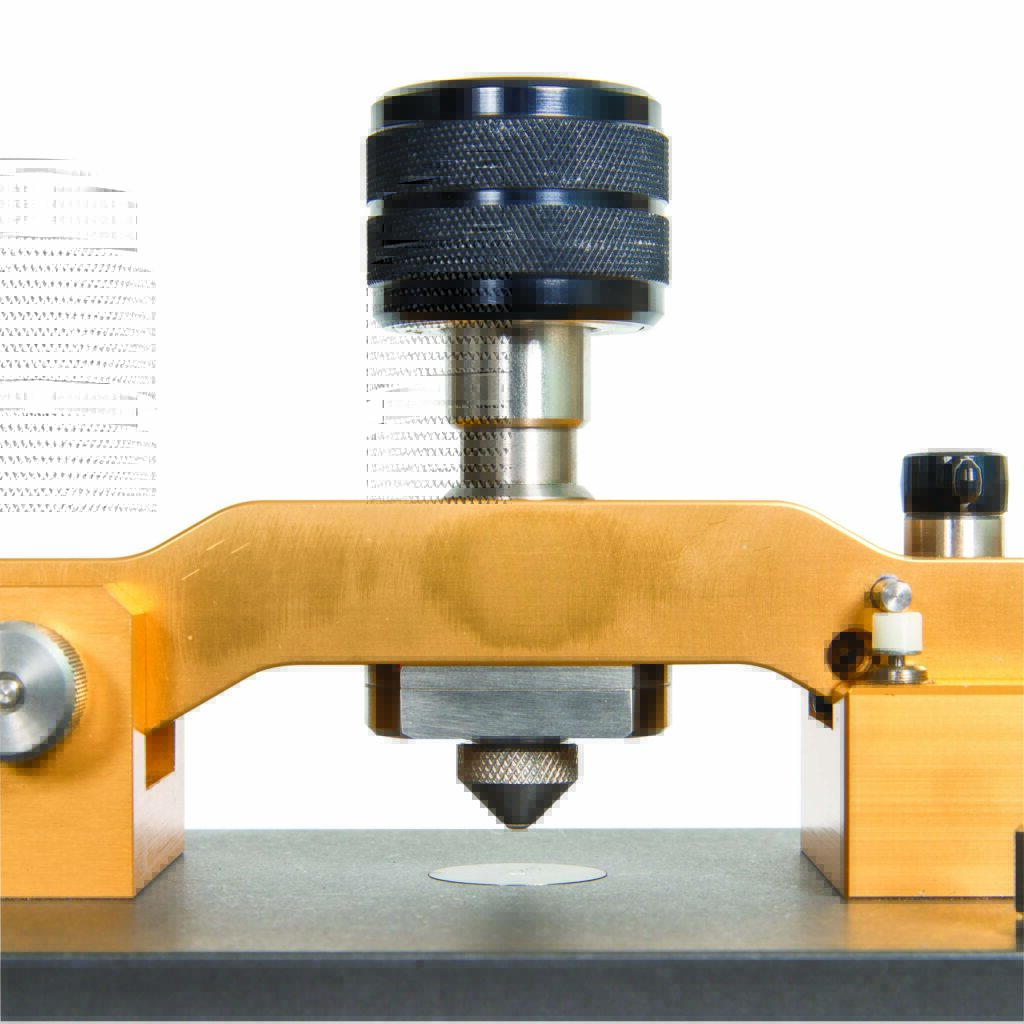
Polymer films can be solution cast or melted and pressed into flat discs using a heated press and mold. The latter gives superior control of film thickness, which is vital to ensure consistency when building the calibration curve. It’s also faster since it doesn’t involve dissolving the polymer and can be done on plastic pellets up to a few millimetres in size.
The thin films are analysed with the transmission technique. This method ensures that the IR beam sees the whole thickness of the sample and gives us an average composition of everything in the beam.

Identification and fault finding in automotive polymers
The proportion of plastics in vehicles driven on our roads is around 50% by volume, according to industry experts [2]. Plastics are lightweight and hardwearing and can be formed into the complex shapes seen in car interiors and in the components shielding vital parts of the engine from water and dirt. Identification of these polymers is required for a number of reasons, ranging from securing the raw material supply for the components to forensic analysis by police investigators [3].
In many cases a good identity match can be obtained quickly via ATR spectroscopy. This is a reflectance technique which uses the phenomenon of internal reflection to interrogate the surface layers of a material. The principal advantage of the technique is that materials can be measured without sample preparation, requiring only firm contact with the measurement crystal to ensure a good measurement is obtained.
ATR accessories such as Specac’s own Golden Gate come with different anvil tips to clamp different samples. A flat anvil would be best for powder materials that simply crush under load; a recessed anvil is better for polymer beads; and a grooved anvil head can be used to position fibers and wires on the measurement point.

Forensic analysis
For samples between 1 µm and 1 mm in size, a microscope accessory will come into its own. IR microscopes can be run in transmission, reflectance, and ATR modes just like benchtop systems. Once again, which technique you require comes down to the properties of the material under examination: surface properties, such as defects and stains, would be best examined using ATR; fibres, textiles, and small inclusions of material that have been removed as contaminants are often best examined in transmission mode. Use of a diamond compression cell can reduce their thickness and increase their apparent width under the microscope, both of which improve the signal-to-noise ratio for the measurement.
Specac Application Notes
We have an extensive library of technical and application articles for you to read about. A selection of these relevant to the topics above are linked below.


References
- The state of the nation: Recycling in the UK, Recycling Bins, https://www.recyclingbins.co.uk/recycling-facts/, accessed 24/5/2022
- Plastics makers plot the future of the car, Chemical & Engineering News, https://cen.acs.org/articles/95/i45/Plastics-makers-plot-future-car.html, accessed 24/5/2022
- Driven to his death: Mystery of motorcyclist body on M4, BBC News, https://www.bbc.co.uk/news/uk-wales-43716912, accessed 24/5/22
Related Posts
GET IN TOUCH