fuels, lubricants, and specialty oils where viscosity, contamination control,
and repeatability are persistent challenges.
In fuel and lubricant testing, analytical accuracy depends on the sample presented to the spectrometer. Inconsistent sampling, contamination, or poor handling of viscous materials can mean non-representative results, leading to repeat testing, audit risk, delayed decisions, and reduced confidence in reported data.
By improving sampling consistency and reducing handling variability, we help scientists and engineers protect data quality and operate with greater confidence in regulated and high-stakes testing environments.

Characterise composition, additives, and blend ratios across fuels, biofuels, and lubricants using quantitative FTIR methods designed for viscous and complex liquid samples.

Detect chemical changes caused by oxidation, thermal stress, and contamination to evaluate oil condition, degradation, and performance over time.

Measure viscous or reactive materials that are difficult to analyse using conventional liquid cells, with controlled pathlength and minimal sample preparation.

Gain insight into chemical reactions under realistic operating conditions using in-situ spectroscopy solutions with controlled temperature, pressure, and atmosphere environments.
Fuel and oil analysis spans everything from routine screening to high-precision quantitation and reaction monitoring under demanding conditions. When sampling methods are poorly matched to the material or environment, variability, contamination, and non-representative measurements can undermine results and delay decisions. The solutions below are engineered to improve sampling consistency and measurement reliability across industrial and research settings. Explore the options or speak with our technical team to determine the most dependable configuration for your application.

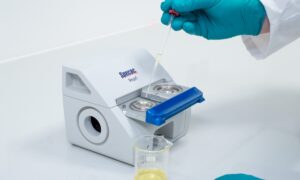
Precise, reproducible quantitation of fuels, oils, and viscous liquids with consistent pathlength control and minimal sample preparation, even for challenging industrial samples. Compliant with ASTM E2412 standard practice.

Easy to access clean samples, regardless of viscosityu and suspended particles. Benchmark against standard methods and practices published by ASTM

A sealed, fixed pathlength cell capable of being pressurised to 30 psi (2 bar). Ideal for use in laboratories needing to flow their sample through a cell.
Catalyse a leaner, greener future with Specac’s robust solutions for petrochemical researchers, optimise catalyst formulation, uncover reaction mechanisms and extend catalyst performance.
It is an effective and efficient device. It has good scientific standards for your research. (High-Temperature High-Pressure Cell)
Kuldeep Kumar, University of Delhi
Very handy to use. It is especially good for my applications because it is not necessary to purge the spectrometer chamber by changing samples. Much better than the conventional liquid IR cells. (The Pearl)
Rodrigo Cormanich, University of Campinas
The Golden Gate ATR has been used for a wide range of samples from chemicals and polymers to pieces of biomass. It has not let us down for any of these applications and has proven to be robust for a range of operators of differing abilities and also capable enough for more demanding samples.
Paul Elliott, University of York